Recyclean
Incentivizing Recycling on College Campuses Through Design Thinking
ROLE
Sole UX Designer
.
TIMELINE
3 months
.
TEAM
Just Me
.
SKILLS
Design Thinking, User Research, UX Design
OVERVIEW
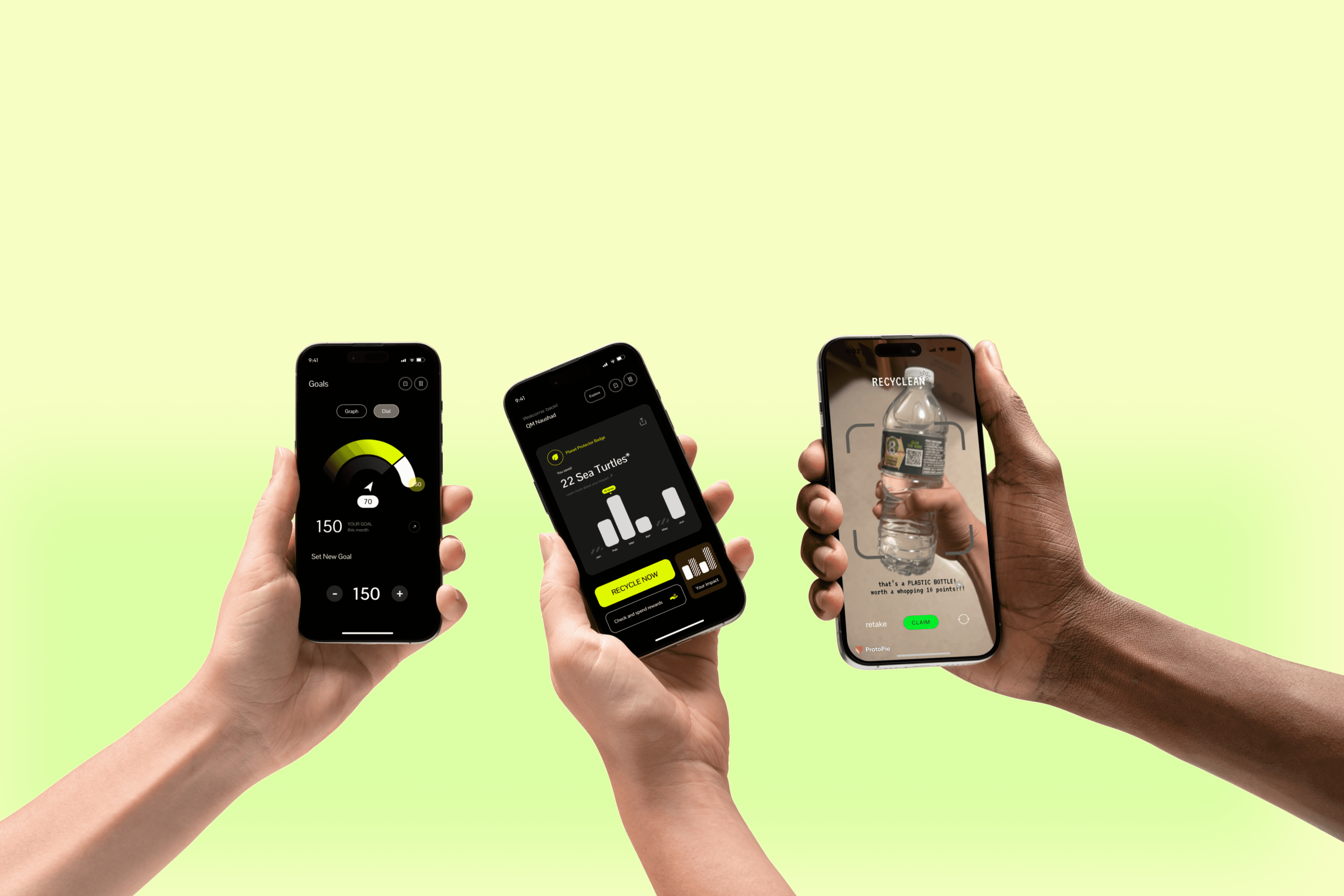
I created an AI powered interactive system that turns recycling into a social activity to help meet NYU's Sustainability Goals
Using design thinking process, I conducted user research and designed a system over 22 weeks that incentivizes students to recycle properly using an app and technology that uses AR and AI
Design Thinking Principles
Using Design Thinking principles 4 user research methods with a over 30 students, facility staff, and sustainability officers
Prototyping & Testing
Going wide in ideation based on design implications from research and rapidly testing concepts with users.
Iterating with Feedback
Continuously iterating on concepts and validating product decisions with experts and users alike.
.
PROBLEM
76% of recyclables end up in the landfill due to user confusion and inconsistent signage
Research indicates that 94% of Americans support recycling and 74% believe it should be a top priority. However, there is a massive gap between intent and action. Due to the inconsistency of recycling programs (e.g., specific rules on glass or residue), the current systems are confusing and frustrating for users to operate.
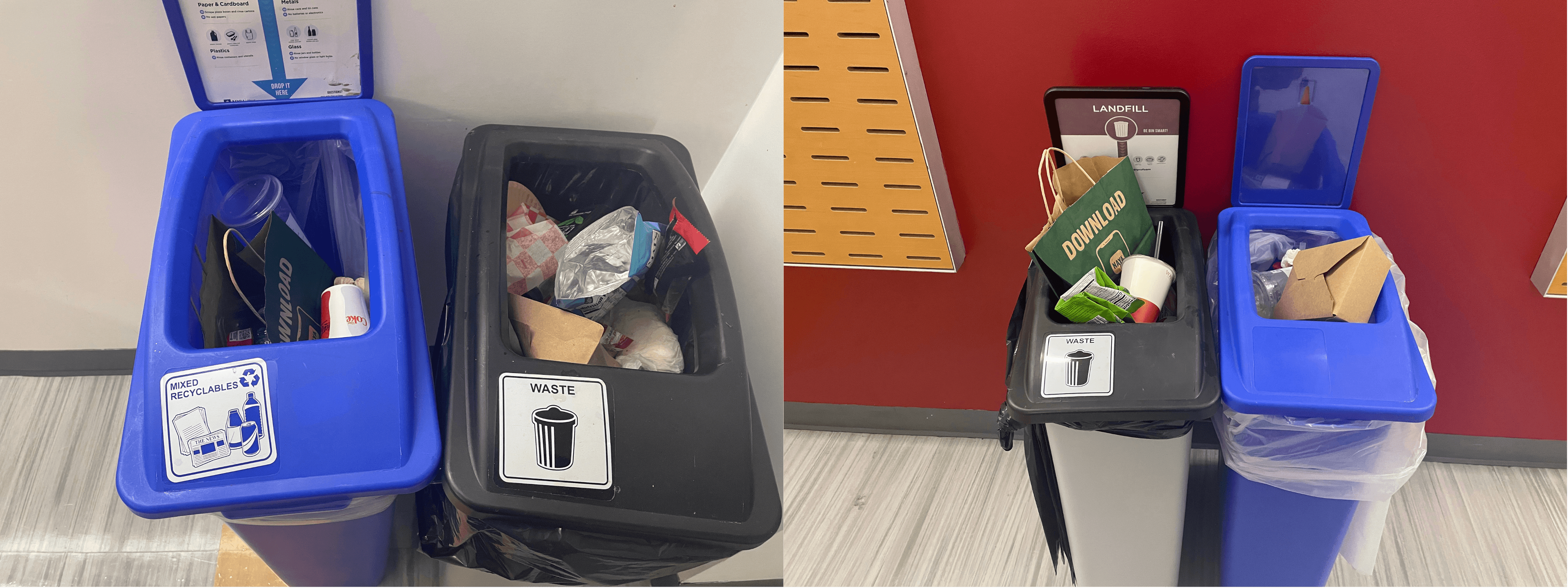
These images were taken from disposal stations around NYU. Labels are missing, recyclables are misplaced and the landfill bin is overflowing with recyclables
Between 2016 and 2022, NYU generated nearly 5,000 tons of waste annually, yet the diversion rate remained at 38%
The impact of this confusion is measurable at the campus level. Between 2016 and 2022, NYU generated nearly 5,000 tons of waste annually, yet the diversion rate remained at only 38%. Our field observations revealed that students rushing to class simply do not have the time to decode the "small print" on static bin labels, leading to high contamination rates where viable recyclables are mistakenly sent to the landfill.
Thus, I asked myself,
How might we create a system that encourages the NYU community to dispose of recyclables properly and increase engagement through incentives?
.
SOLUTION
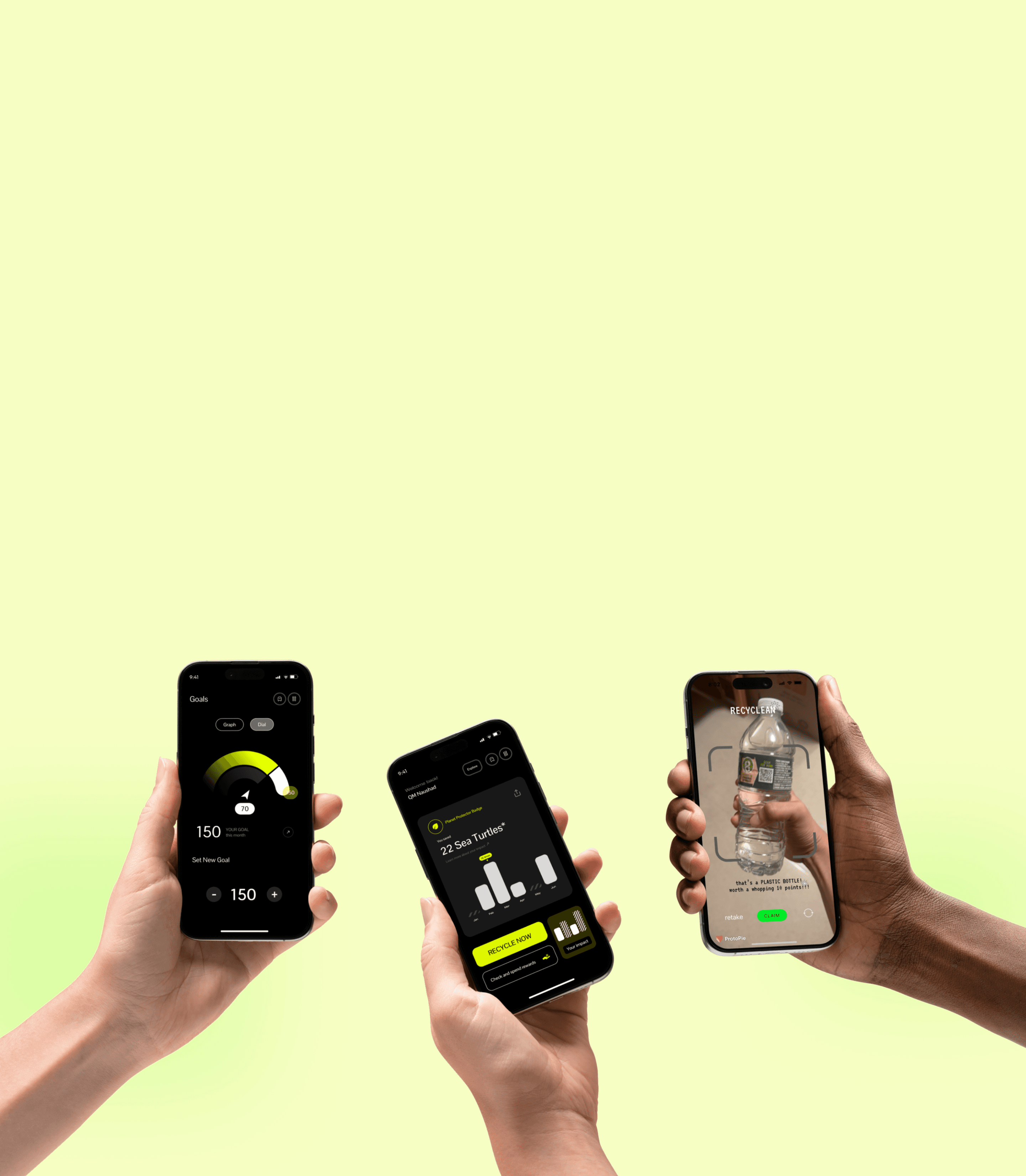
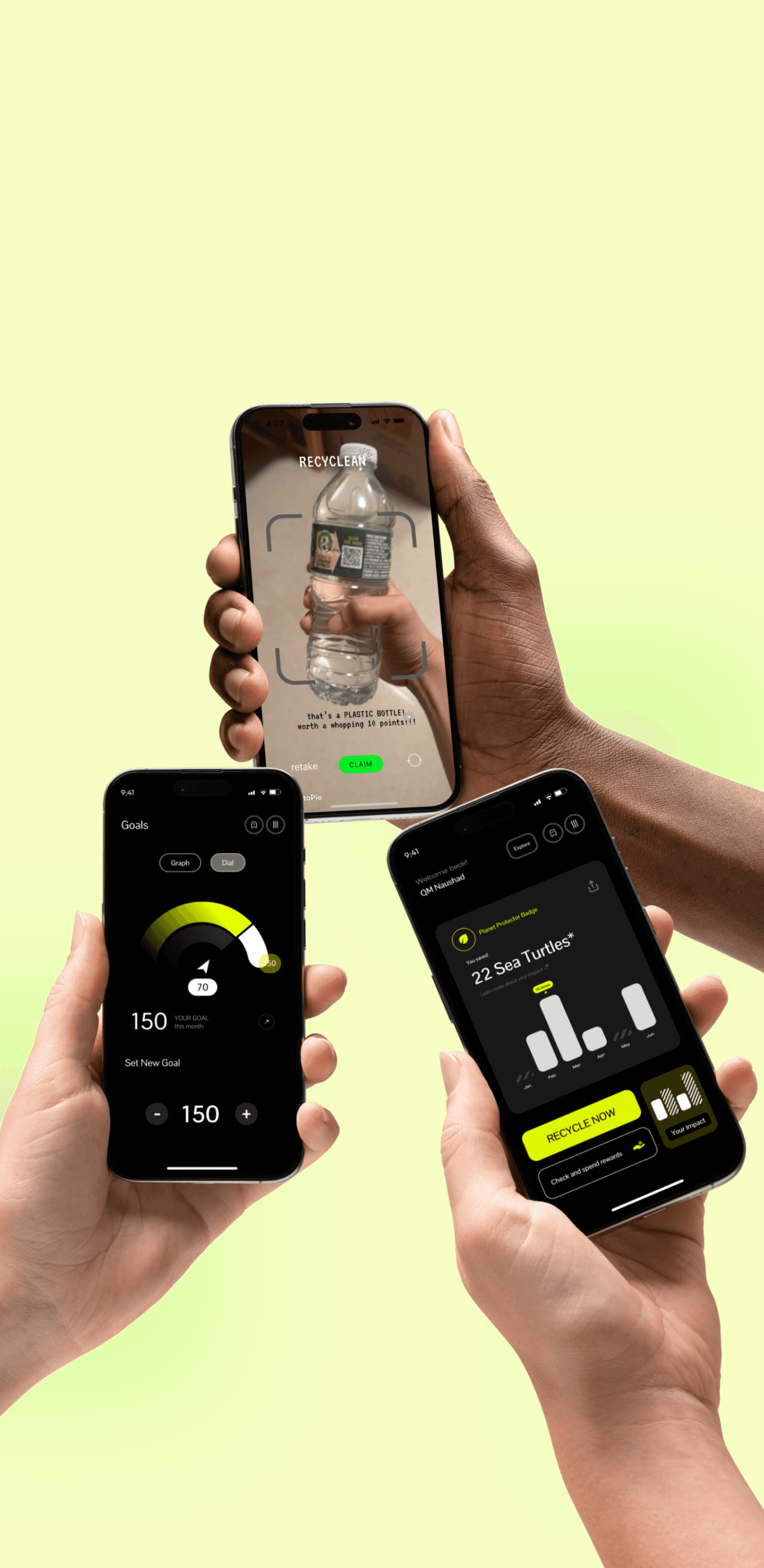
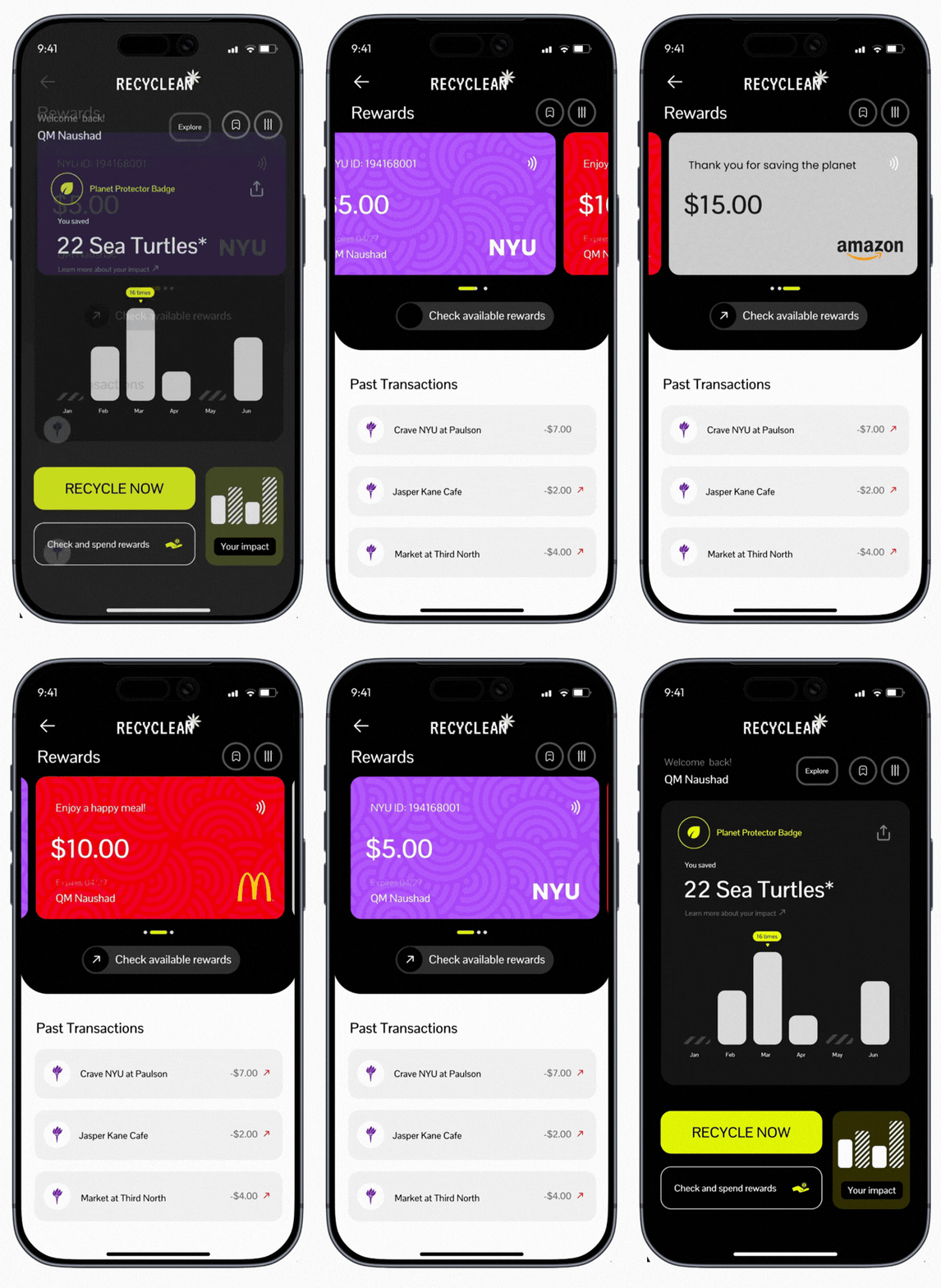
An app which uses AI to scan recyclables and rewards users redeemable points; creates community engagement with badges and leaderboards
Instant Scanning
Users simply open the widget and bring their item in front of the camera. Using AI, the app instantly identifies the material and rewards the user using NFC tags on bins if the item is put in the right bin

Rewards & Incentives
Every properly disposed item earns the user points. These points allow students to advance on a community leaderboard and unlock tangible rewards.
Community Engagement
By creating a sense of excitement and healthy competition, Recyclean shifts recycling from a solitary task to a collective mission for the campus.

.
.
USER RESEARCH
I took a design thinking approach to tackle this problem
The process, as it turned out was more iterative than linear. I had to go back and forth between the steps as I got more and more feedback and rethought my concepts.
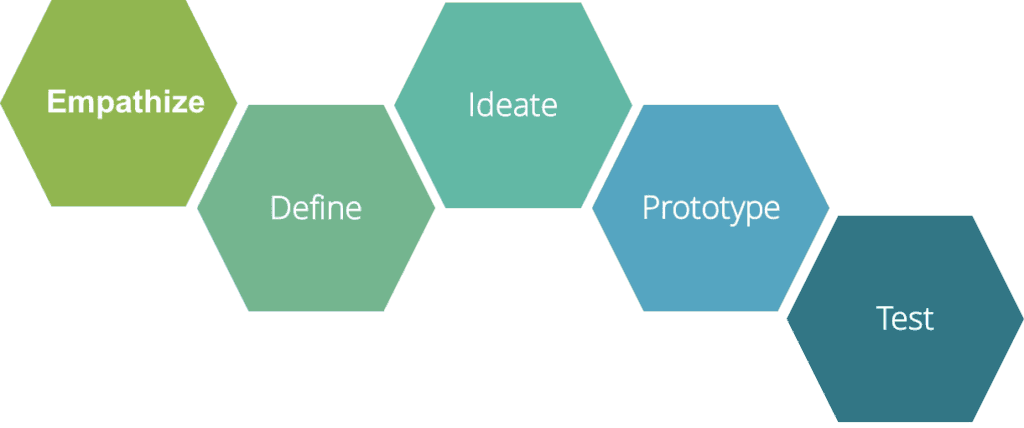
Empathize
I conducted interviews, observations, surveys, spoke to stakeholders to get a holistic view of the existing scenario. Over 30 participants ranging from students, staff, and administrators were engaged.
Define
The findings from synthesizing the data in the empathize stage helped me formulate the problem statement and narrow down the focus based on user needs
Ideate
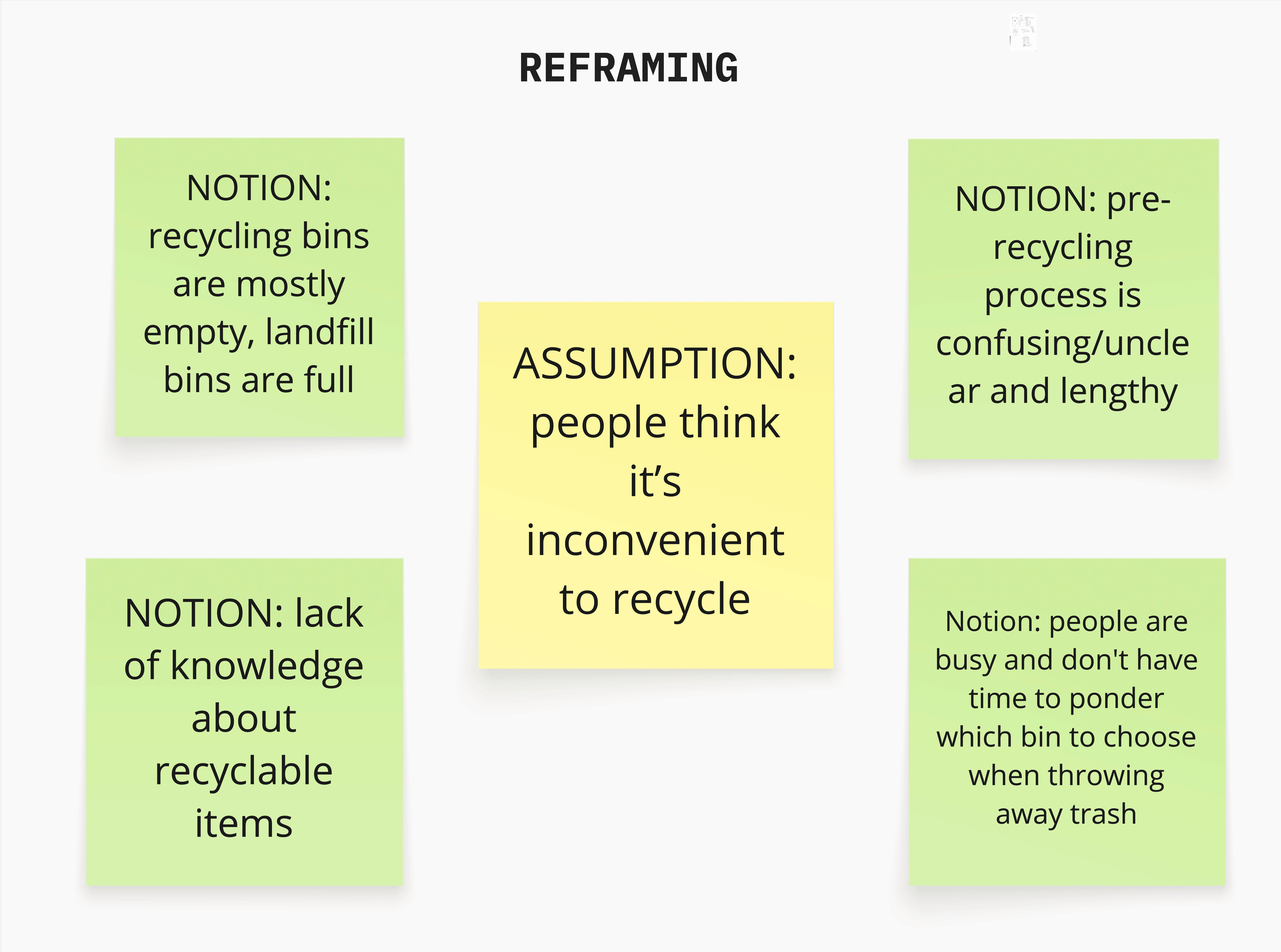
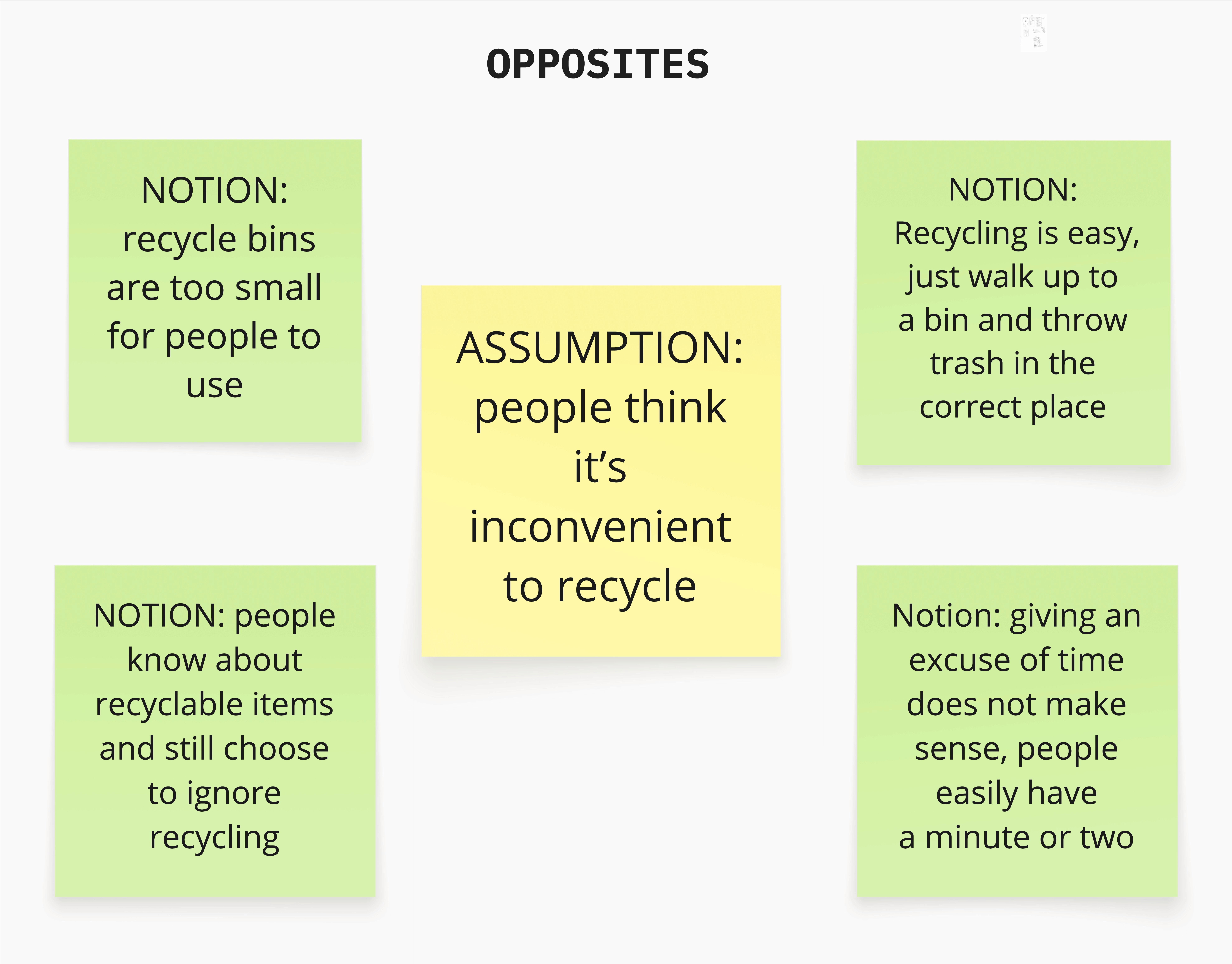
I took a very iterative approach for ideation. I used brainstorming methods like Crazy 8s, Reframing and considering Opposites and took feedback for the concepts
Prototype
Based on the feedback from ideation, I prototyped some concepts and went back to define to make sure the prototypes were within the scope of the project
Test
The prototypes were tested with the community campus wide, and I made final improvement based on feedback from users.
.
USER RESEARCH (EMPATHIZE)
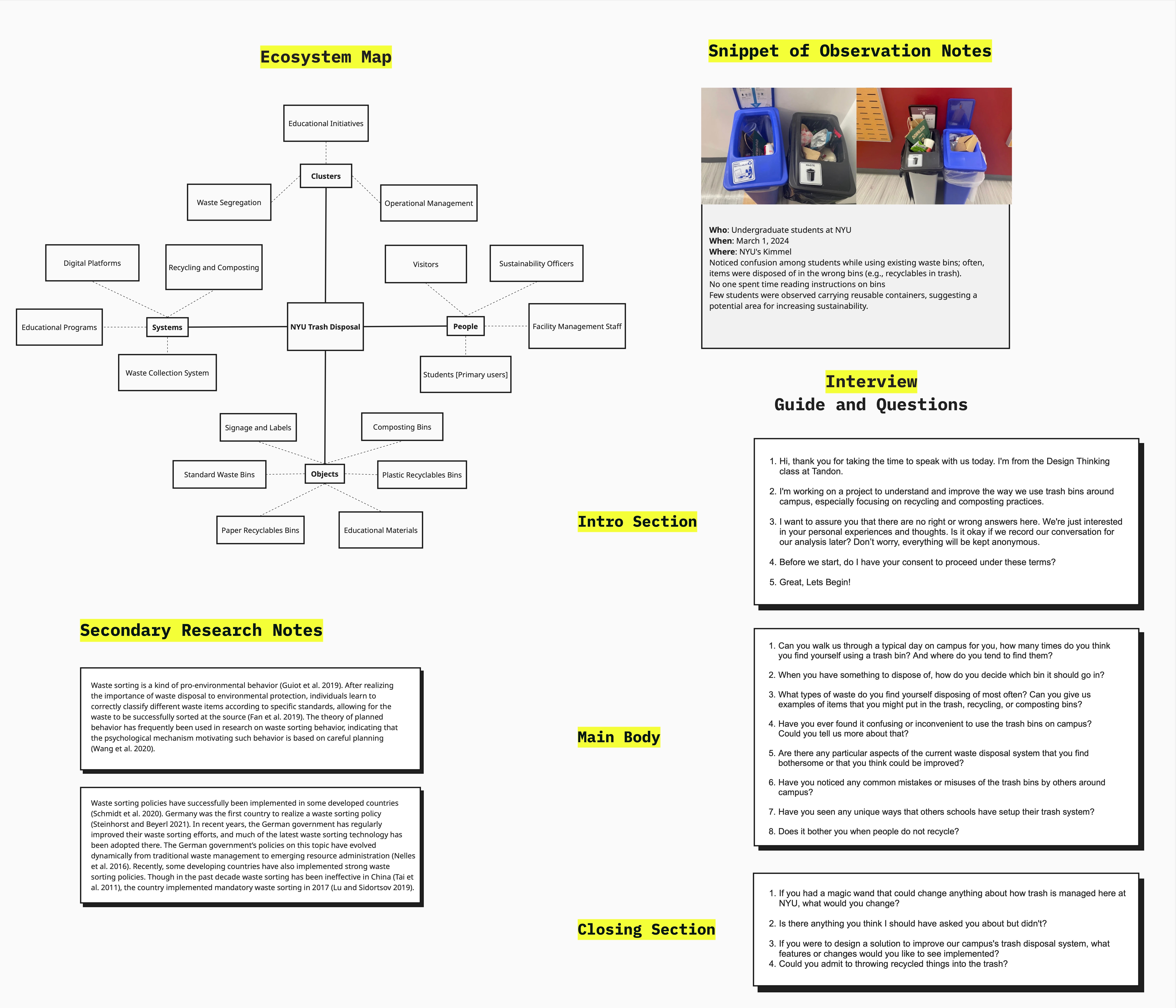
I spent weeks mapping the campus waste ecosystem, observing real-time disposal habits, and interviewing stakeholders.
The data collection process was rigorous and multi-faceted. To move beyond assumptions, I conducted Contextual Inquiries at high-traffic dining areas, observing that students often ignored static signage due to time constraints. I triangulated this with structured interviews using the "Magic Wand" technique to uncover latent needs, and created a comprehensive Ecosystem Map to visualize the disconnected relationships between students, facility staff, and sustainability officers.
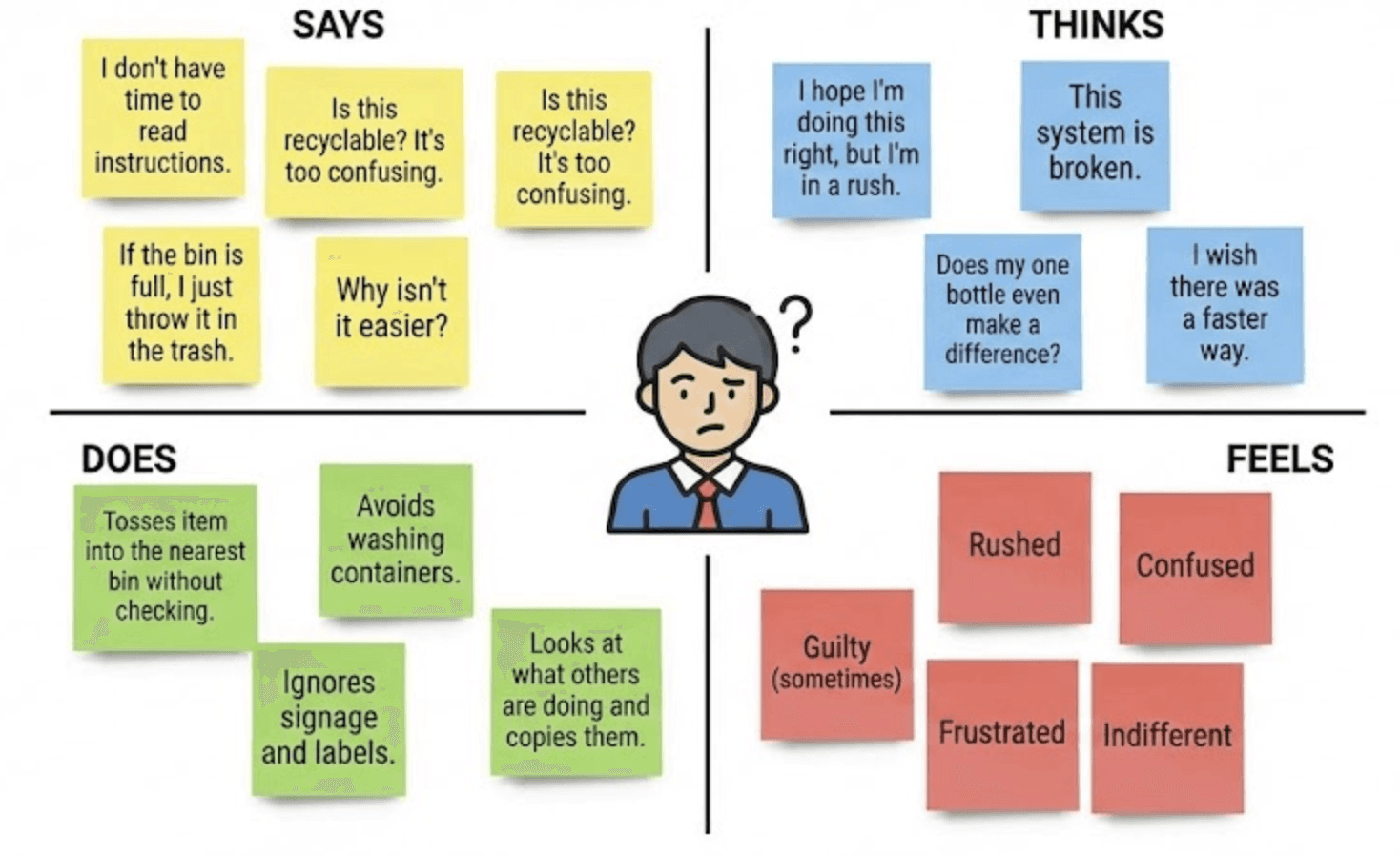
An Empathy map helped me understand user perspectives to ultimately create a user centered solution. The map represents what an NYU student says, thinks, does and feels about recycling on campus:
.
.
KEY FINDINGS
I identified the key findings from my research which helped me narrow the focus to create a product
Microuncertainties Cause Decision Fatigue While students want to recycle, they are paralyzed by "micro-uncertainties". Questions like, "is this plastic type accepted?" lead to decision fatigue, causing users to default to the landfill bin out of sheer convenience.
Physical Signage Do Not Draw Attention Current disposal sites at NYU rely on small print and static labels that are easily ignored in high-traffic areas. Without an interactive element, users do not stop and pay attention, leading to a low diversion rate of only 38%.
Confusion Drives Contamination Students often want to recycle correctly but are stymied by a lack of specifics on items like plastic bottles with residue or paper with stickers. This leads to "wish-cycling," where students place questionable items in recycling bins in the hopes they are recyclable
Incentives Outperform Altruism Interviews showed that environmental concern alone isn't enough to overcome the "Rush to Class". To change behavior, the solution must act as a "game" rather than a chore, shifting the motivation rom abstract environmentalism to immediate, tangible rewards
.
.
USER PERSONAS
I created user personas to help me stay aligned with core user needs
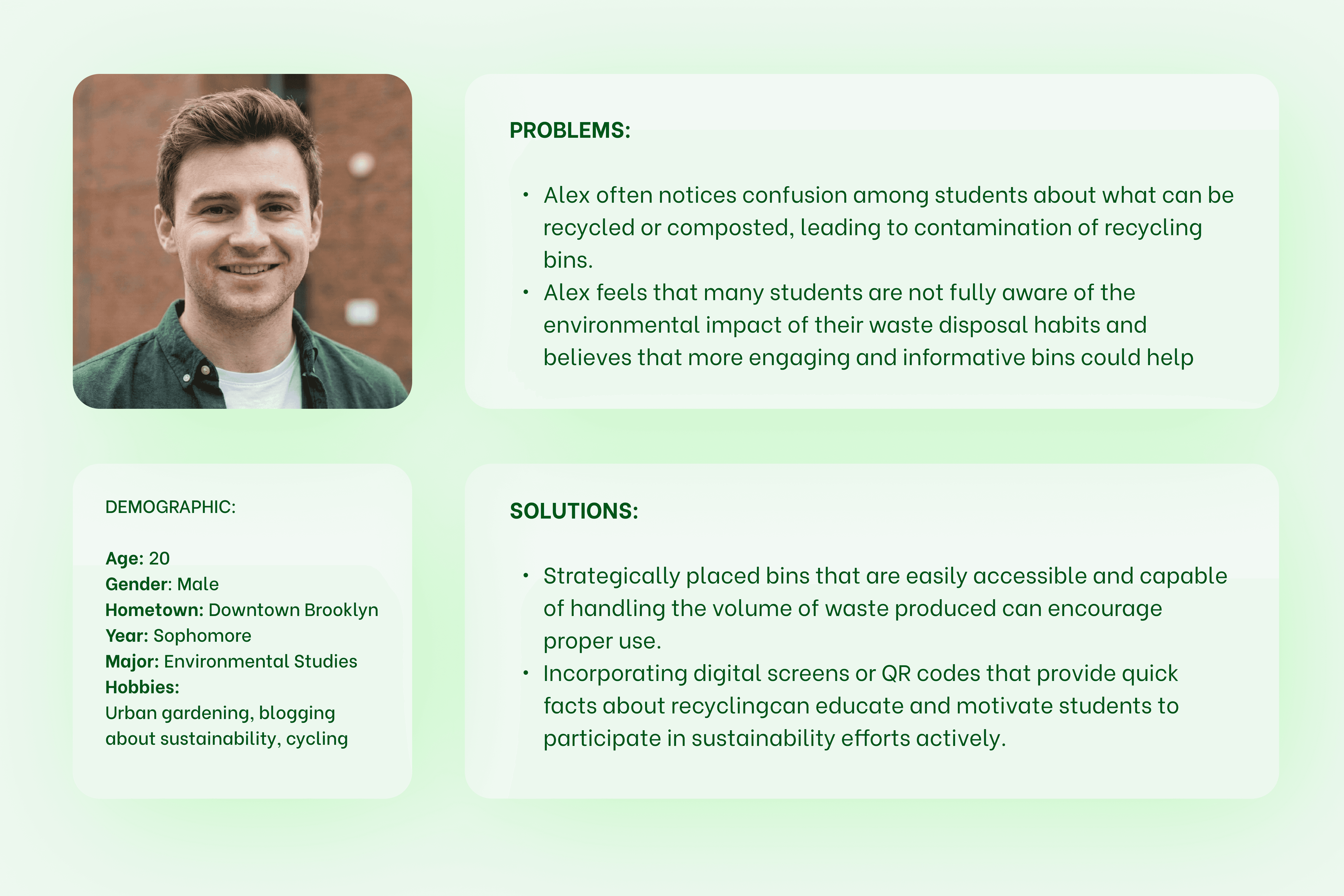
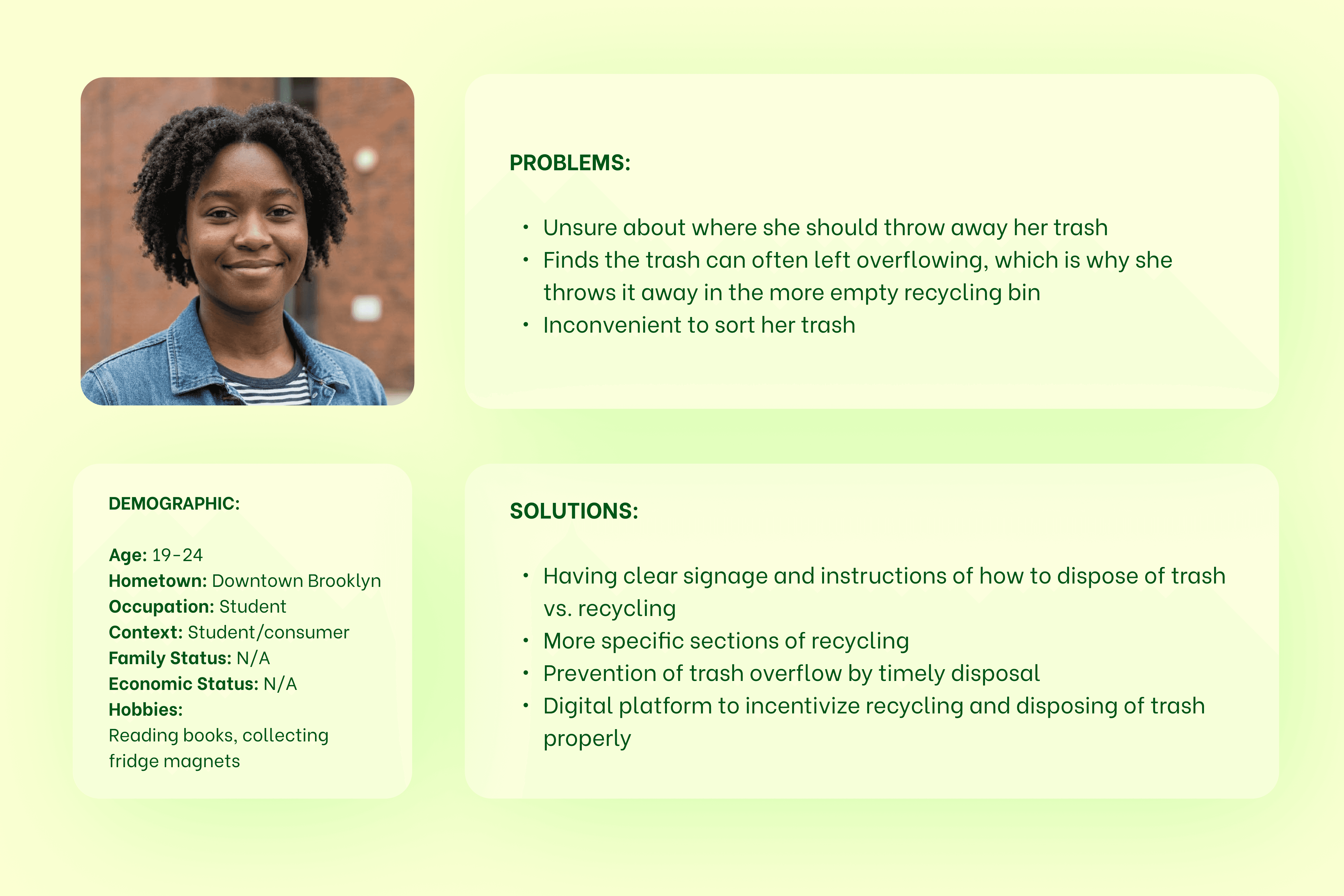
Gamification can be used to turn a confusing chore into a rewarding campus-wide competition.
.
.
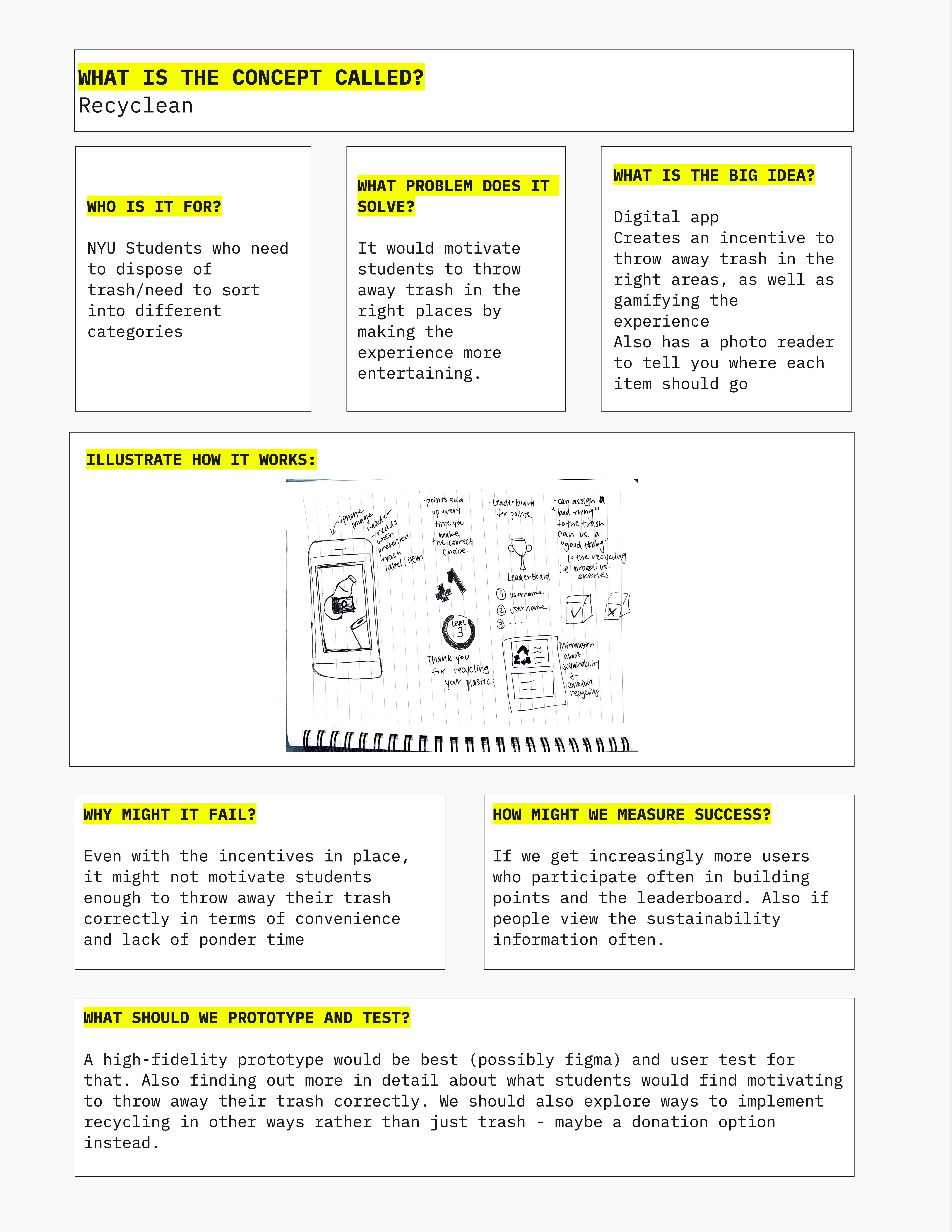
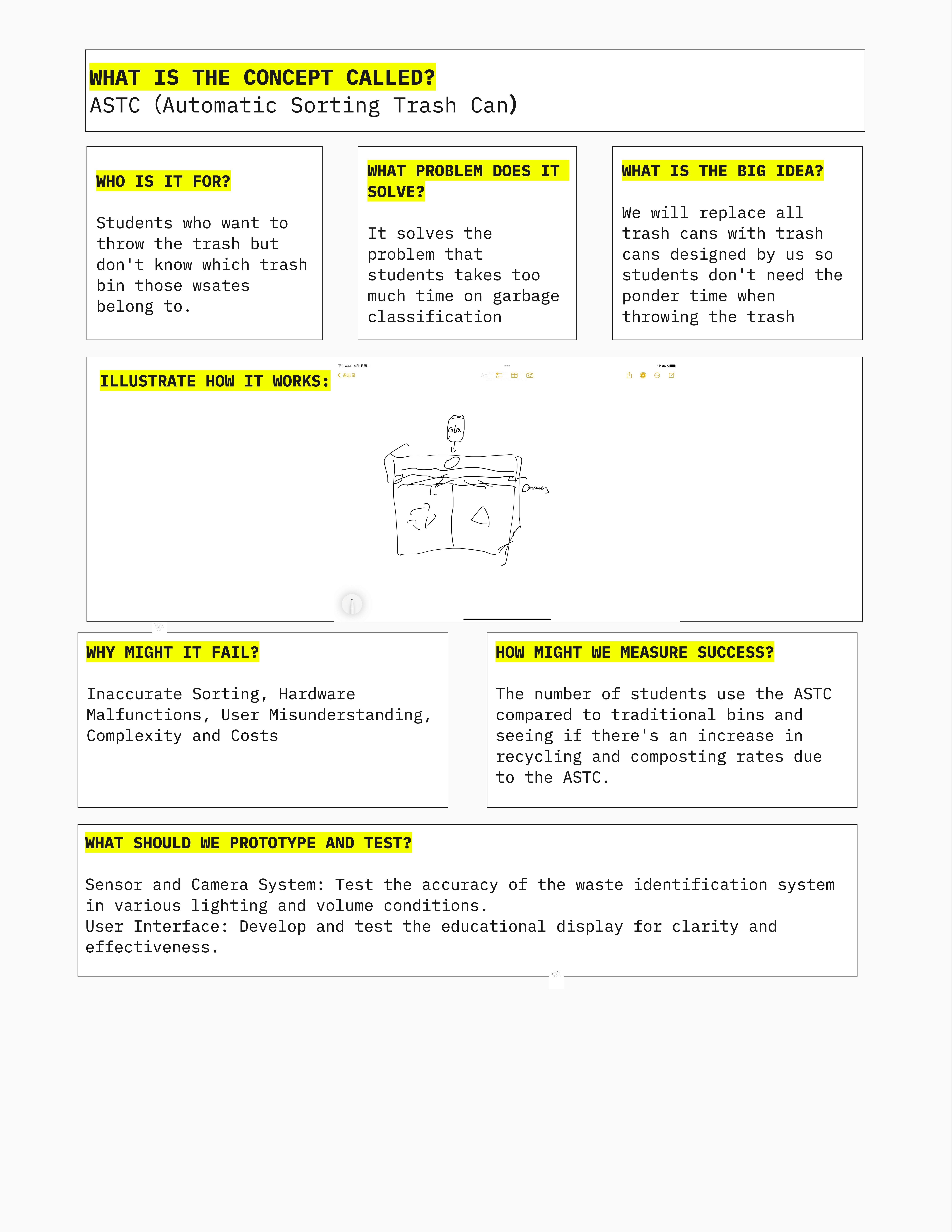
IDEATING
With all the insights I started ideating. I also reframed and formulated opposites for more out-of-the-box solutions.
.
.
PROTOTYPING
With all the insights I started the iterative prototyping process and got feedback
.
.
REFLECTIONS
I learned that…
READ NEXT:

Explore the full archive →